
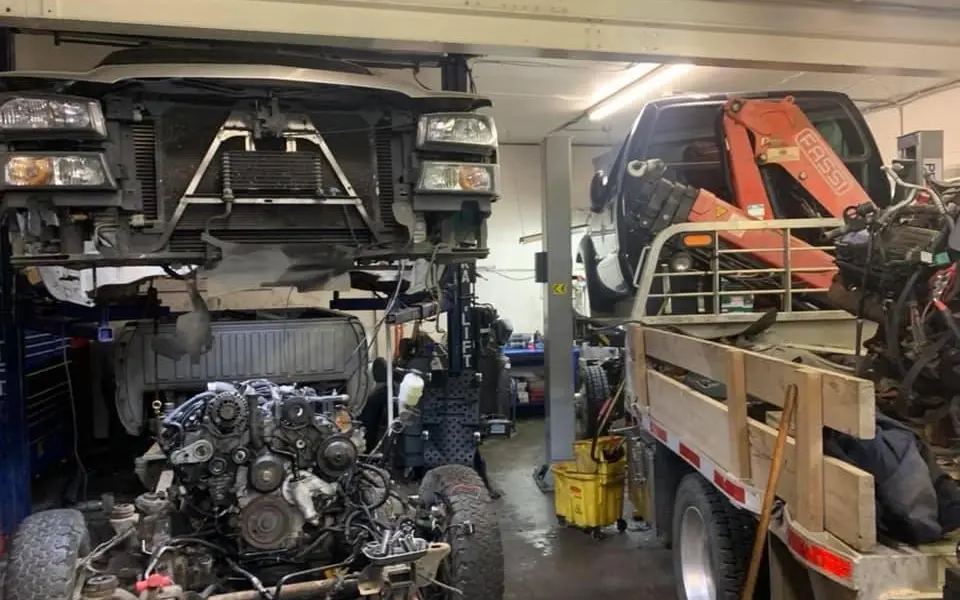
Diesel engines
All our work is on diesels, but some problems need more than general repair. This is the specialised side: turbochargers, high-pressure fuel systems and emissions controls.
Signs of trouble: less power under acceleration, a new whistle that can point to the turbo, fuel economy dropping for no clear reason, or a check engine light that may be tied to the emissions system.
What we do: in-depth diagnostics, fuel injection cleaning and repair, turbocharger service, exhaust and emissions work (including DPF and DEF systems), cooling system flushes and repairs, and performance upgrades. We know the Powerstroke, Cummins and Duramax platforms well and work on other diesel makes too, using diagnostic equipment built for diesel systems.
Engine replacement
Sometimes an engine reaches the end of its life through age, wear or major damage. Replacement means putting in a new or remanufactured engine.
Signs it may be time: a steady loss of power until the truck struggles on mild hills, a knock that keeps getting louder, oil consumption climbing, and repairs that don’t hold. At some point it costs more to keep fixing the old engine than to replace it. We’ll give you a straight answer on which side of that line you’re on.
What we do: remove the old engine, inspect the related components, and install the new or remanufactured unit. We reconnect every mechanical and electrical system and torque everything to factory specification.
Transmission replacement
The transmission carries the engine’s power to the wheels. When it fails, replacement with a new or remanufactured unit is often the most reliable fix.
Signs of trouble: slipping gears (revs climb but speed doesn’t), rough or jerky shifts, clunking or grinding underneath, trouble getting into gear, or popping out of gear. It usually gets worse with every kilometre.
What we do: remove the old transmission and install the replacement, making sure alignment, fluid level and every connection to the engine and drivetrain are right.
Rebuilds
A rebuild is the alternative to replacement for an engine, transmission or differential. We take the unit apart, clean and inspect every part, replace what’s worn and put it back together.
Signs a rebuild makes sense: a gradual decline rather than a sudden failure. The engine is down on power with more smoke or a light knock or tick. The transmission hesitates or shudders between gears, or a whine is getting louder. The drivetrain clunks on and off the throttle or vibrates at certain speeds. The parts aren’t finished, but they’re not at their best either. A rebuild can restore performance for less than a replacement.
What we do:
- Engines: cylinder honing, crankshaft polishing, valve grinding, new pistons, rings, bearings and seals.
- Transmissions: inspect and replace clutches, bands, gears and seals.
- Differentials: replace bearings, gears and seals, and set backlash and preload correctly.
We work to the tolerances of each engine platform so the rebuilt unit meets or beats the original specification.
Differentials
The differential lets the wheels on one axle turn at different speeds through a corner. Without it, tires scrub and axles take damage.
Signs of trouble: clunking, clicking or popping in tight, slow turns, wheels that seem to bind or skip, a hum or whine that changes with speed, vibration through the floor, or gear oil leaking near the axles.
What we do: inspect first to find the actual problem. Then it’s a fluid change, bearing replacement, rebuild or a swap to a new or remanufactured unit, set up for correct gear mesh, alignment and lubrication.
Timing belts
The timing belt keeps the crankshaft and camshaft in step. Many modern diesels use a timing chain instead, which lasts much longer. On engines that do use a belt, a failure can bend valves and damage pistons.
When to do it: usually there’s no warning. The trigger is the manufacturer’s replacement interval by distance or age, or a ticking or slapping noise from the front of the engine.
What we do: confirm whether your engine has a belt or a chain and check its condition. If the belt is due, we replace it along with the tensioners and idler pulleys, to the manufacturer’s procedure. We can also tell you the interval for your engine.